What doesn’t kill us makes us stronger.
Sometimes a single “no” pushes you to keep looking, find new solutions, and end up even more independent.
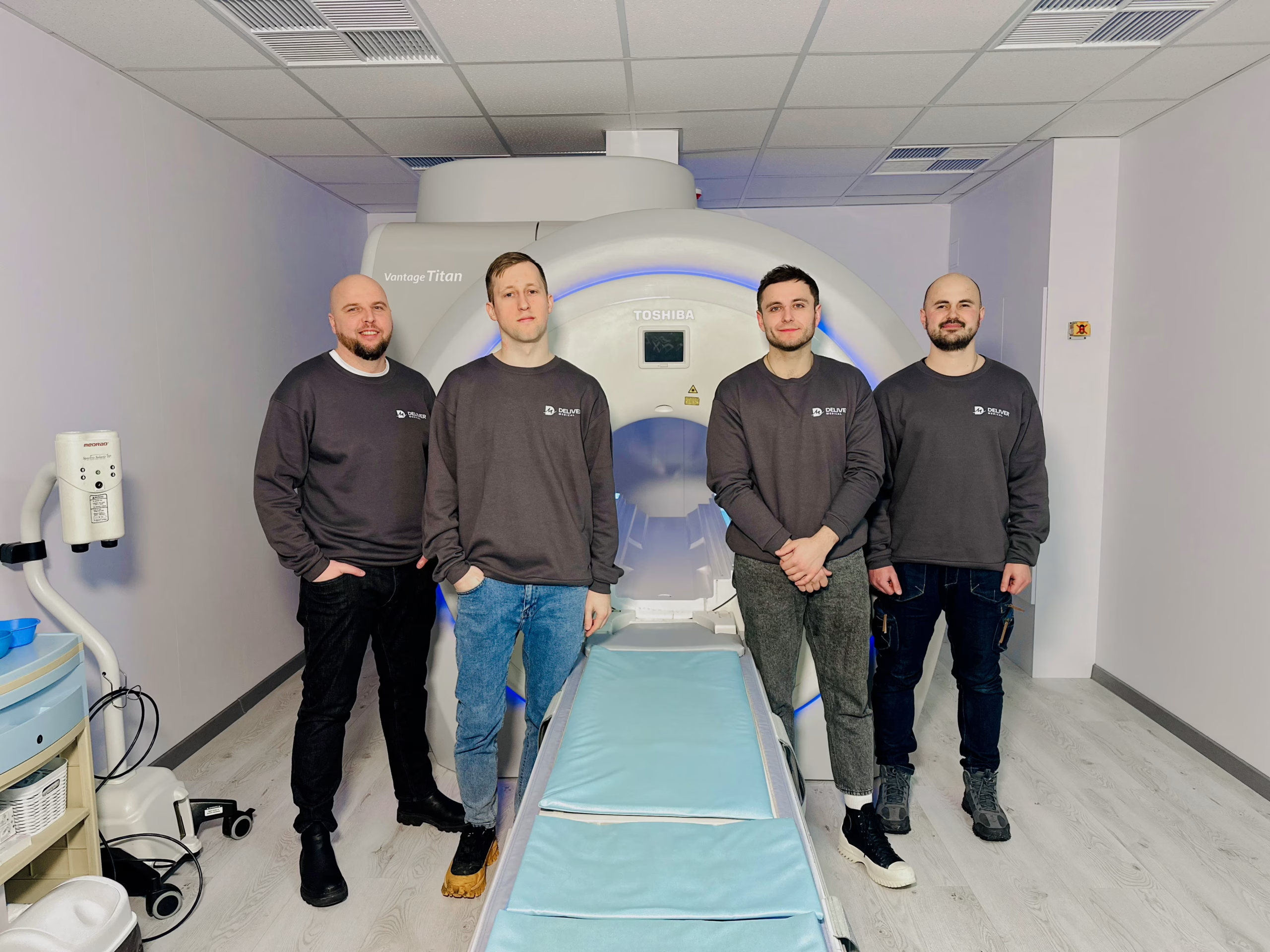
That’s exactly what happened with our project in Zaporizhzhia, where we were tasked with decommissioning and reinstalling a Canon Orian magnetic resonance imaging (MRI) system.
The technical side was clear. Almost.
When I first heard about this project, I caught myself thinking: this is doable.
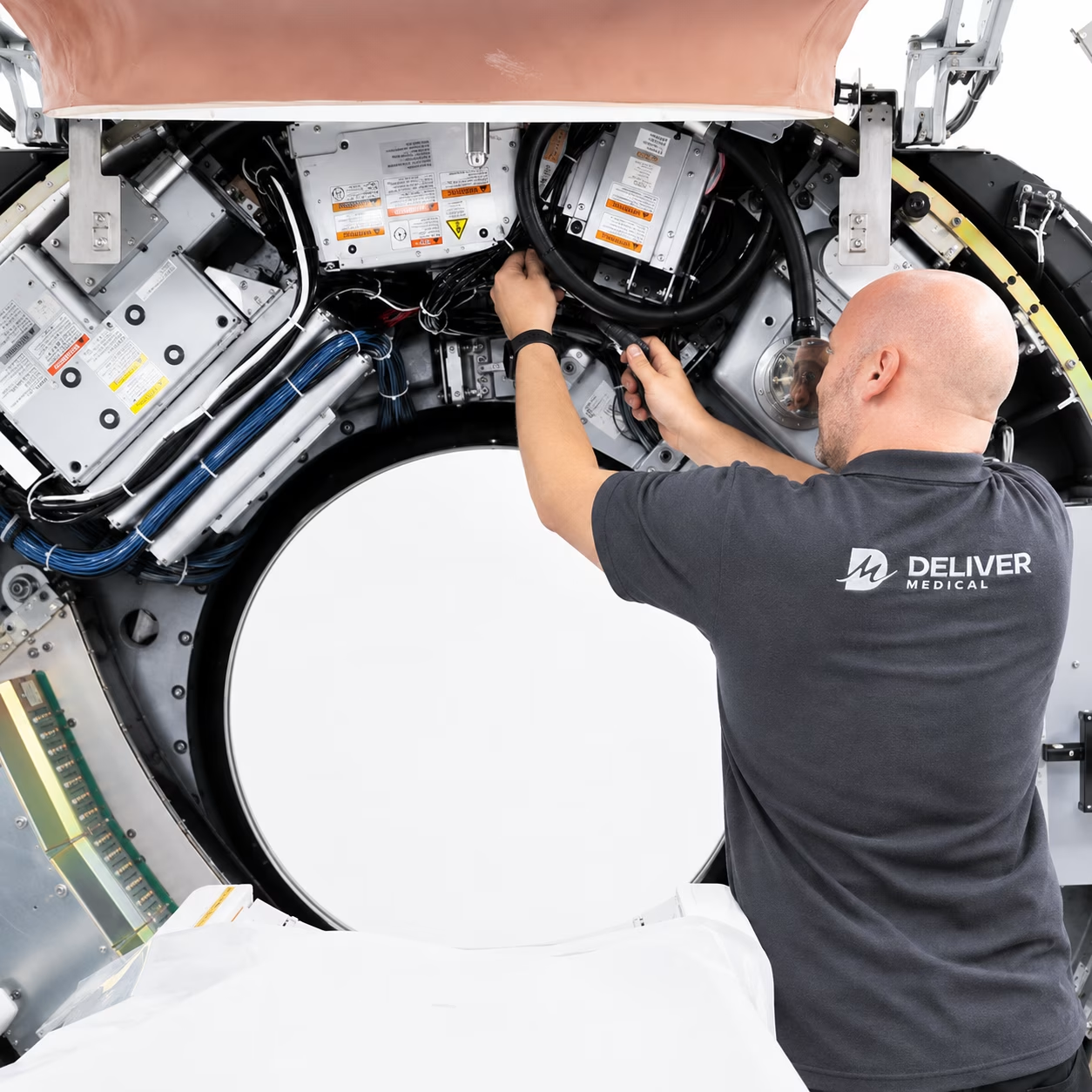
I knew that together with the team we could handle the technical work: take the MRI apart, build the radio-frequency (RF) shielded room, move the system, and install it at the new site.
The only thing that really worried me was a set of specialized devices — magnet power supplies, often simply called “ramp supplies” in the field.
Put simply, without them an MRI isn’t really an MRI yet. This equipment is needed to ramp up the magnetic field.
And that’s where things got interesting.
The first option didn’t work out
First, I reached out to partners in Europe. They offered a rather complicated arrangement involving importing and exporting the equipment, plus extra logistics.
That wasn’t something we wanted to get into.
Then I contacted a company in Ukraine that had the power supplies we needed. I wasn’t counting on much — and, as it turned out, for good reason.
I got a firm “no.”
What next?
Keep looking.
The solution came from the Netherlands
The company we buy computed tomography (CT) spare parts from recommended a partner in the Netherlands.
We got in touch — and that’s when things got more interesting.
It turned out this company had developed universal power supplies that work with MRI systems from different manufacturers: Canon, Siemens, Philips, and GE.
We got a quote, paid for it, and before long the equipment was in Zaporizhzhia.
Of course, I had plenty of questions.
Would the field ramp up?
Would everything work the way it should?
Would we run into problems with equipment from a manufacturer we’d never worked with before?
But the support from our Dutch partners was truly first-rate.
It took a little longer than usual and came with a few more nerves — but we did it.
We ramped up the magnetic field.
The system worked exactly the way a fully functional MRI should.
I breathed a sigh of relief.
But the story didn’t end there
Once the job was done, the power supplies had to go back to the Netherlands.
That’s when I realized I didn’t really want to part with them. Solid equipment, even if a bit bulkier than the original.
I decided to ask how much new ones would cost.
I saw the price — it was sky-high.
But the email had one more offer in it. Just like a bank contract, the most interesting part was in the fine print.
They offered us pre-owned power supplies manufactured in 2022.
The package included:
— compatibility with Siemens and Canon MRI systems;
— support for all magnet types;
— a full 12-month warranty;
— training for our engineers.
On top of that, the system could be expanded to work with Philips and GE for an additional fee.
And most importantly, the price was significantly lower than for new equipment.
We didn’t think twice.
Invoice. Payment. Done.
Sometimes “no” is the start of something bigger
This story reminded me of a simple truth.
Sometimes being told “no” is actually a good thing.
It pushes us to look for other options, meet new partners, gain new experience, and become stronger and more independent.
So “no” doesn’t always mean something won’t work out.
Sometimes it means the result will be even better and more promising.
And perhaps the biggest takeaway for me: the most valuable asset any company can have is its people.
When you have a great team and skilled professionals by your side, even a firm “no” sounds completely different:
“I’ll get it done anyway.”