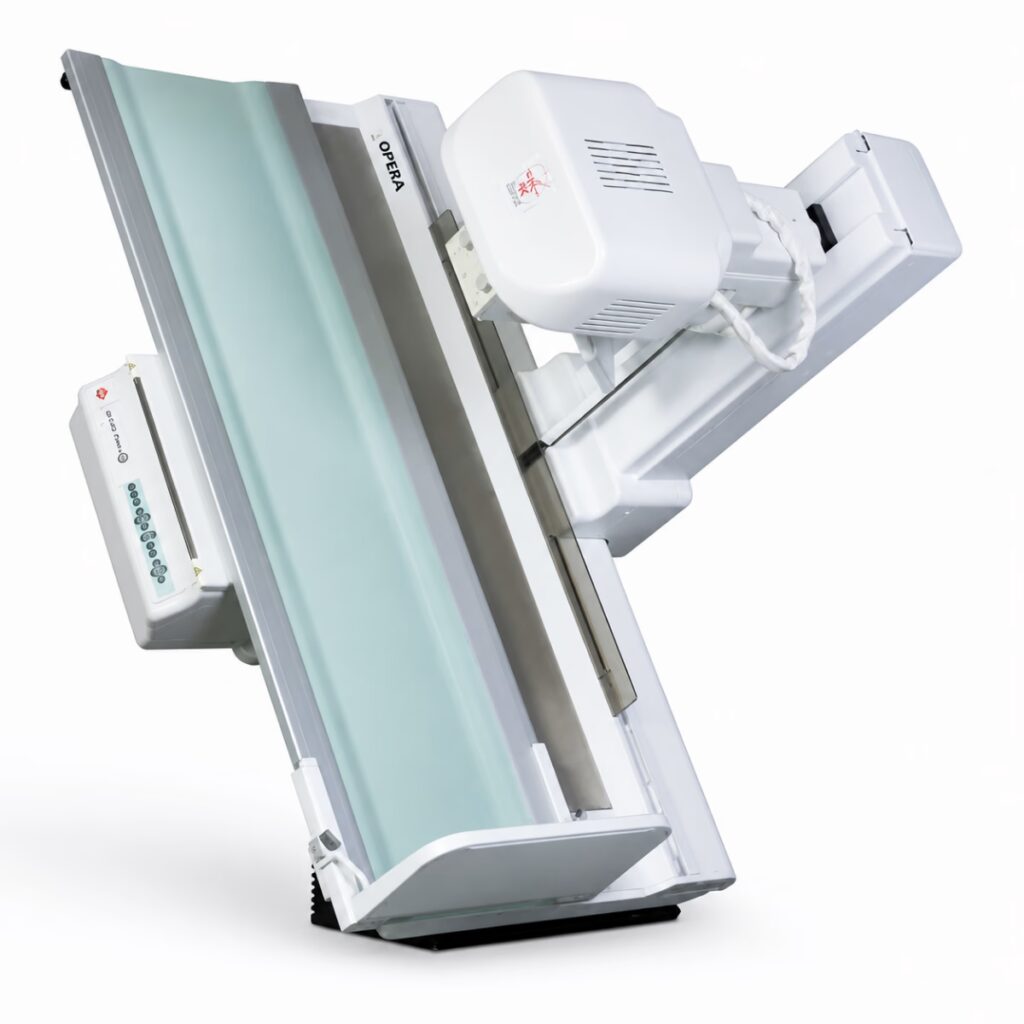
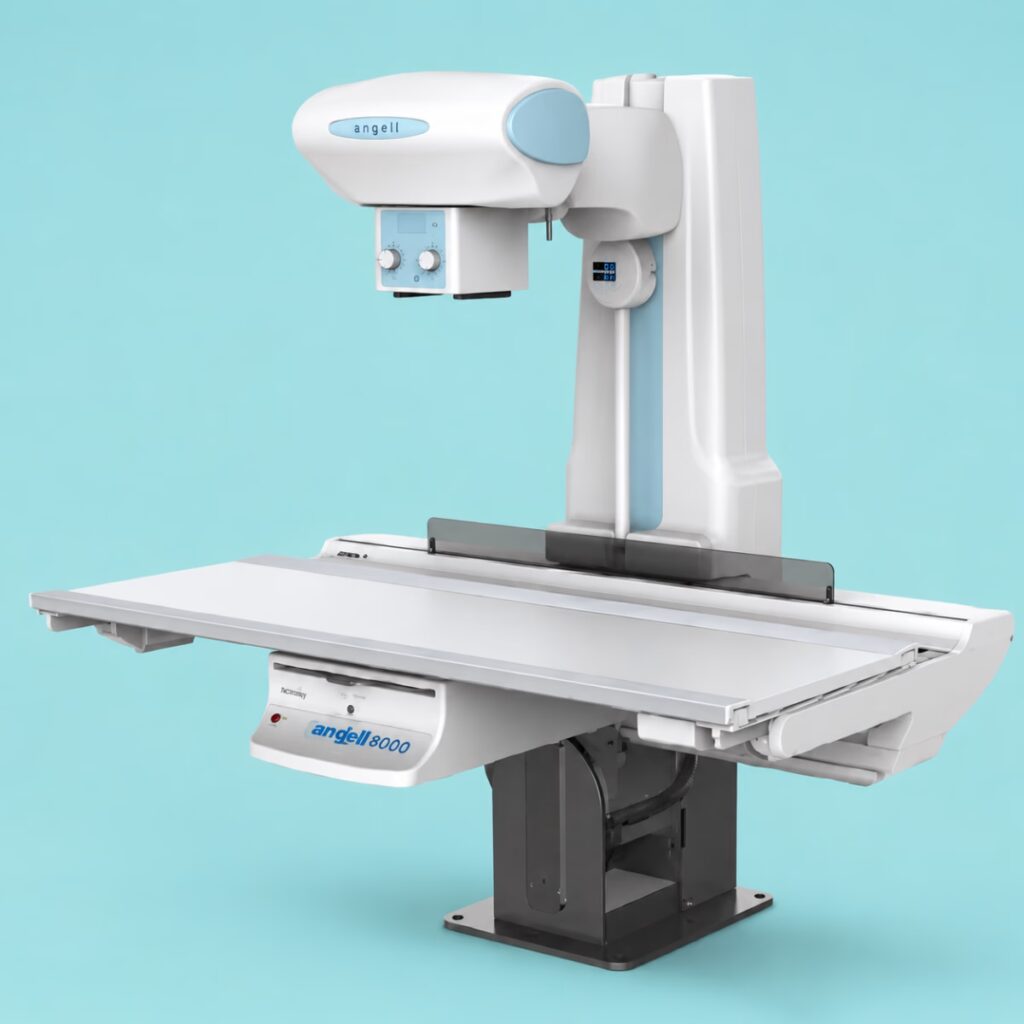
X-ray imaging remains the foundation of both primary and specialized diagnostic care. It enables healthcare professionals to quickly detect fractures, lung diseases, musculoskeletal disorders, spinal conditions, chest abnormalities, and many other pathologies. Despite the widespread use of CT, MRI, and ultrasound, X-ray systems continue to be an essential investment for hospitals, outpatient clinics, and private healthcare facilities.
Modern digital X-ray systems significantly outperform previous generations of analog equipment. They deliver exceptional image quality and high-resolution visualization, helping clinicians make faster and more accurate diagnoses. Thanks to digital image processing, results are available within seconds, while images can be securely stored electronically without compromising quality.
Another key advantage of modern digital radiography is optimized radiation dose management. Intelligent imaging algorithms and highly sensitive digital detectors produce high-quality diagnostic images while minimizing patient radiation exposure. Automated positioning and exposure settings also reduce repeat examinations, shorten procedure times, improve workflow efficiency, and increase department productivity. If you are planning to purchase an X-ray system for a new or existing healthcare facility, choosing equipment that meets today’s clinical and technological standards is essential.
Deliver Medical supplies professional X-ray systems for healthcare providers of every size, including private clinics, multidisciplinary hospitals, and specialized diagnostic imaging centers. Our portfolio includes advanced digital X-ray systems that meet international standards for safety, performance, and image quality.
For trauma departments and high-volume imaging facilities, stationary X-ray systems are the preferred solution. They are also ideal for radiology departments with a continuous patient flow, providing reliable operation under heavy workloads while supporting a broad range of diagnostic examinations with outstanding accuracy.
Mobile X-ray systems are widely used in intensive care units, emergency departments, operating rooms, and inpatient wards. Their greatest advantage is the ability to perform imaging at the patient’s bedside without transportation. Compact, battery-powered, and easy to maneuver, these systems deliver high-quality digital images wherever they are needed.
Regardless of configuration, today’s digital X-ray systems feature high-sensitivity detectors, automated positioning programs, advanced image post-processing tools, and seamless PACS/RIS integration. Tell us about your clinical requirements, and the Deliver Medical team will help you select the solution that best fits your facility.
The right X-ray system should be selected based on your facility’s specialty, expected monthly patient volume, the range of examinations performed, and future expansion plans. High-volume hospitals typically benefit from high-performance stationary systems, while mobile X-ray units are ideal for bedside imaging and mobile healthcare applications.
Key factors to consider include:
We help healthcare providers invest in equipment designed for long-term reliability and clinical performance. Before purchasing an X-ray system, consulting with experienced technical specialists is highly recommended.
The price of a digital X-ray system depends on multiple factors, including generator power, system type, manufacturer, digital detector technology, software capabilities, level of automation, system configuration, and other technical specifications.
The cost of a mobile X-ray system is influenced by factors such as battery autonomy, battery capacity, chassis design, and the sophistication of its digital imaging platform. Overall pricing depends on a combination of technical and operational considerations.
When evaluating the total cost of ownership, it is also important to consider:
In some situations, purchasing a refurbished X-ray system may be a cost-effective option. However, it is important to ensure that future maintenance and repair costs will not outweigh the initial savings. The possibility of future system upgrades should also be taken into account.
Deliver Medical supplies advanced diagnostic imaging systems from the world’s leading manufacturers. We provide expert consultation, equipment delivery, installation, and complete commissioning support, helping healthcare providers build efficient diagnostic imaging departments tailored to their clinical needs.
Our specialists will:
We also provide warranty and post-warranty service, preventive maintenance, and ongoing technical support throughout the entire lifecycle of your equipment. Whether you represent a private clinic, public hospital, or large diagnostic imaging center, every Deliver Medical client receives the same high standard of professional service.
Contact us to receive expert guidance and a customized commercial proposal tailored to your healthcare facility.
Digital X-ray systems provide significantly higher image quality, faster image acquisition, lower radiation exposure, convenient electronic image storage, and seamless integration with healthcare information systems.
The best choice depends on the clinic’s specialty, the range of examinations performed, and the expected imaging volume.
These systems are commonly used in intensive care units (ICUs), emergency and critical care departments, operating rooms, inpatient wards, and in situations where the patient cannot be safely transported.
The cost of an X-ray system depends on several factors, including the type of system, manufacturer, digital detector, system configuration, software, imaging capabilities, and available optional features.
Deliver Medical provides professional installation, commissioning, staff training, as well as warranty and post-warranty service and maintenance.