Selecting an MRI system involves much more than choosing a manufacturer or year of manufacture. It is essential to evaluate the system configuration, upgrade potential, operating costs, and long-term performance.
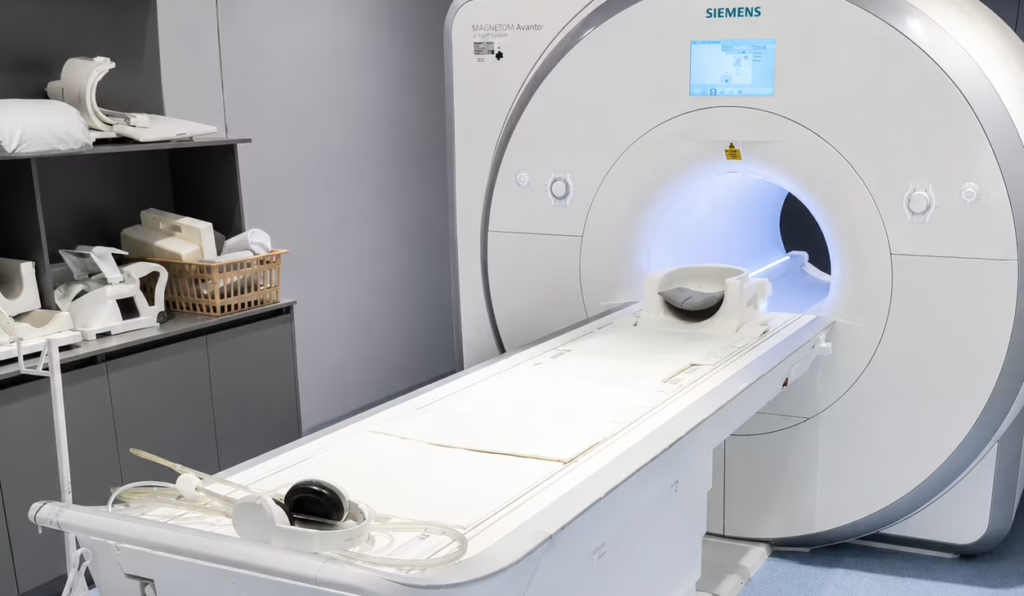
That is why Deliver Medical offers its customers the Siemens Avanto FIT MRI system—a modern solution that combines outstanding diagnostic image quality, reliability, and cost efficiency.
Zero Boil Off technology — significant operating cost savings
One of the key advantages of the Siemens Avanto FIT is its Zero Boil Off technology, which virtually eliminates liquid helium evaporation.
This is especially important today, as the cost of helium has risen significantly and currently averages around $38–40 per liter. Minimal helium consumption helps substantially reduce MRI maintenance costs throughout the system’s service life.
High-performance SQ gradients for superior image quality
The Siemens Avanto FIT is equipped with high-performance SQ gradients that directly enhance MRI image quality.
These powerful gradients provide:
- high spatial resolution;
- sharper diagnostic images;
- faster scan times;
- consistent performance, even in complex clinical cases.
What does the 2005/2013 designation mean?
When selecting an MRI system, you may come across the designation 2005/2013, which often raises questions.
It means that the original Siemens Avanto system was manufactured in 2005 and underwent a complete upgrade to the Avanto FIT configuration in 2013.
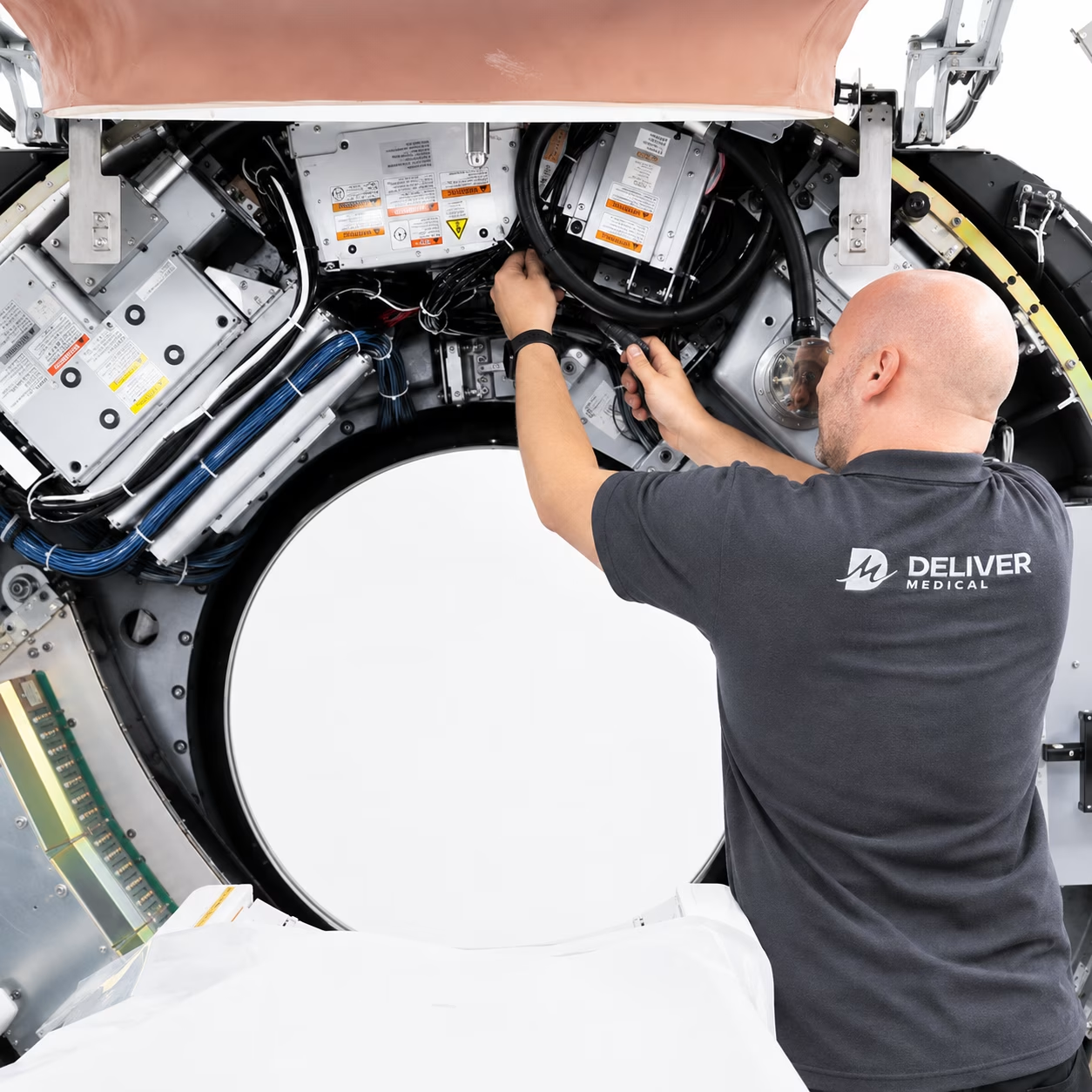
During this upgrade, only the MRI magnet (magnet assembly) remains from the original system. All major components are replaced with modern hardware, including:
- electronics;
- workstations;
- image reconstruction unit;
- main gradient coil;
- software.
As a result of the upgrade, the system is transformed from an 18-channel configuration into a 48-channel platform, significantly improving scan speed, image quality, and workflow efficiency.
Why is the coil configuration so important?
One of the most important factors when selecting an MRI system is the number and selection of RF coils.
These coils determine which anatomical regions can be examined and the diagnostic image quality that can be achieved.
It is important to understand that purchasing additional coils after system installation can be challenging. In most cases, they must be ordered through the manufacturer’s authorized representative or sourced on the European secondary market. For this reason, the coil configuration should be carefully planned before purchasing the system.
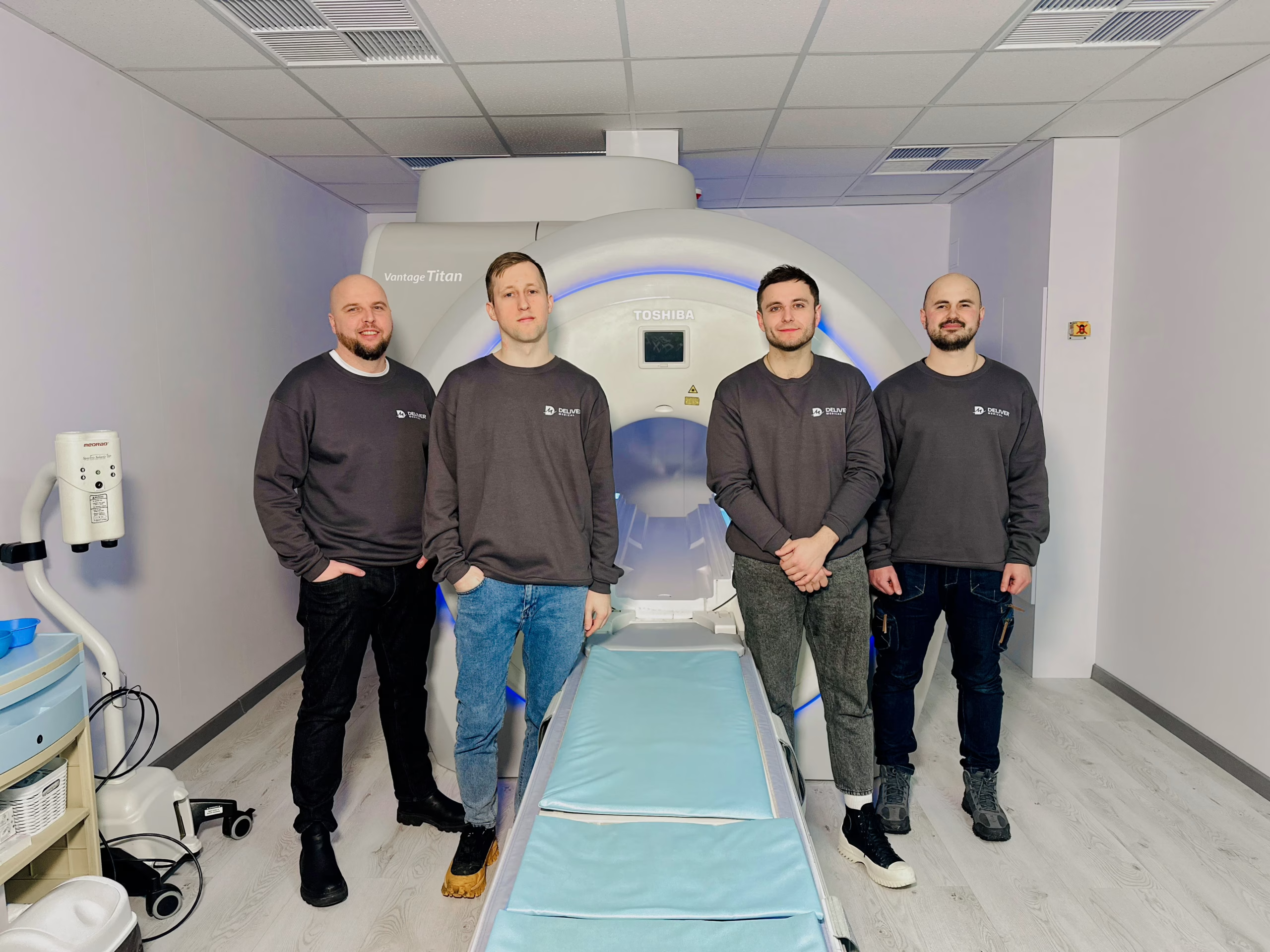
Implementing an MRI project is a comprehensive process in which every stage matters—from equipment selection and technical site assessment to installation, commissioning, and ongoing service support. Deliver Medical specialists help deliver MRI projects of any complexity, from concept to the first patient.
Below are the key stages of an MRI project:
-
Technical site assessment
The first step is evaluating the facility where the MRI system will be installed. This includes assessing the available space, wall and floor slab thickness, magnet delivery access, floor load capacity, electrical power supply, ventilation, air conditioning, and the feasibility of RF shielding.
Tip: A technical site assessment should be completed before renovation begins. This helps identify potential issues early and avoid costly modifications later.
-
Facility design
The design phase includes planning the magnet room, control room, equipment room, patient preparation area, equipment delivery route, manufacturer requirements, fire safety, and healthcare facility regulations.
Tip: The design should consider not only equipment installation but also daily staff workflow and patient comfort.
-
Site preparation
Once the project is approved, construction and installation work begins, including preparing the magnet foundation, installing ventilation, air conditioning, electrical power distribution, grounding, data networks, lighting, and fire alarm systems.
Tip: Strict compliance with the manufacturer’s technical requirements at this stage is essential for ensuring reliable system performance.
-
RF shielding
One of the most critical stages is the installation of the RF shield, also known as a Faraday cage. It protects the MRI system from external electromagnetic interference and ensures consistently high image quality.
Tip: Professional RF shield installation is one of the key requirements for proper MRI system operation.
-
Equipment delivery and installation
An MRI system is highly sophisticated equipment that requires careful transportation planning. This stage includes logistics, rigging, magnet installation, assembly of all system components, and system installation.
Tip: Every stage of delivery and installation should be performed in accordance with the manufacturer’s technical requirements and service documentation.
-
Commissioning and calibration
After installation is complete, engineers perform system configuration, calibration, test scans, verification of all major components, and image quality validation.
Tip: The system should only be placed into clinical operation after successfully completing all technical inspections.
-
Staff training
Successful MRI operation requires more than proper installation. Initial operator training, physician consultations, system operation guidance, and recommendations for daily workflow are all essential for efficient use of the system.
Tip: Proper staff training helps reduce operational errors and enables a faster, more efficient clinical launch.
-
Service and maintenance
Reliable and safe MRI operation requires regular preventive maintenance. This includes monitoring helium levels, inspecting the magnet, cooling and power systems, diagnosing key components, calibration, preventive maintenance, and timely replacement of parts.
Tip: A service and maintenance plan should be established before commissioning to minimize downtime and avoid unexpected expenses.
Expert recommendation
Deliver Medical provides complete MRI project implementation—from equipment selection and facility design to installation, commissioning, staff training, and ongoing service support.
We help prepare your MRI suite for operation so your system is ready to begin scanning patients from day one.